


LOOKING TO CONVERT MORE OF YOUR PROSPECTS TO SALES CALLS?
 learn more
Table of Content:
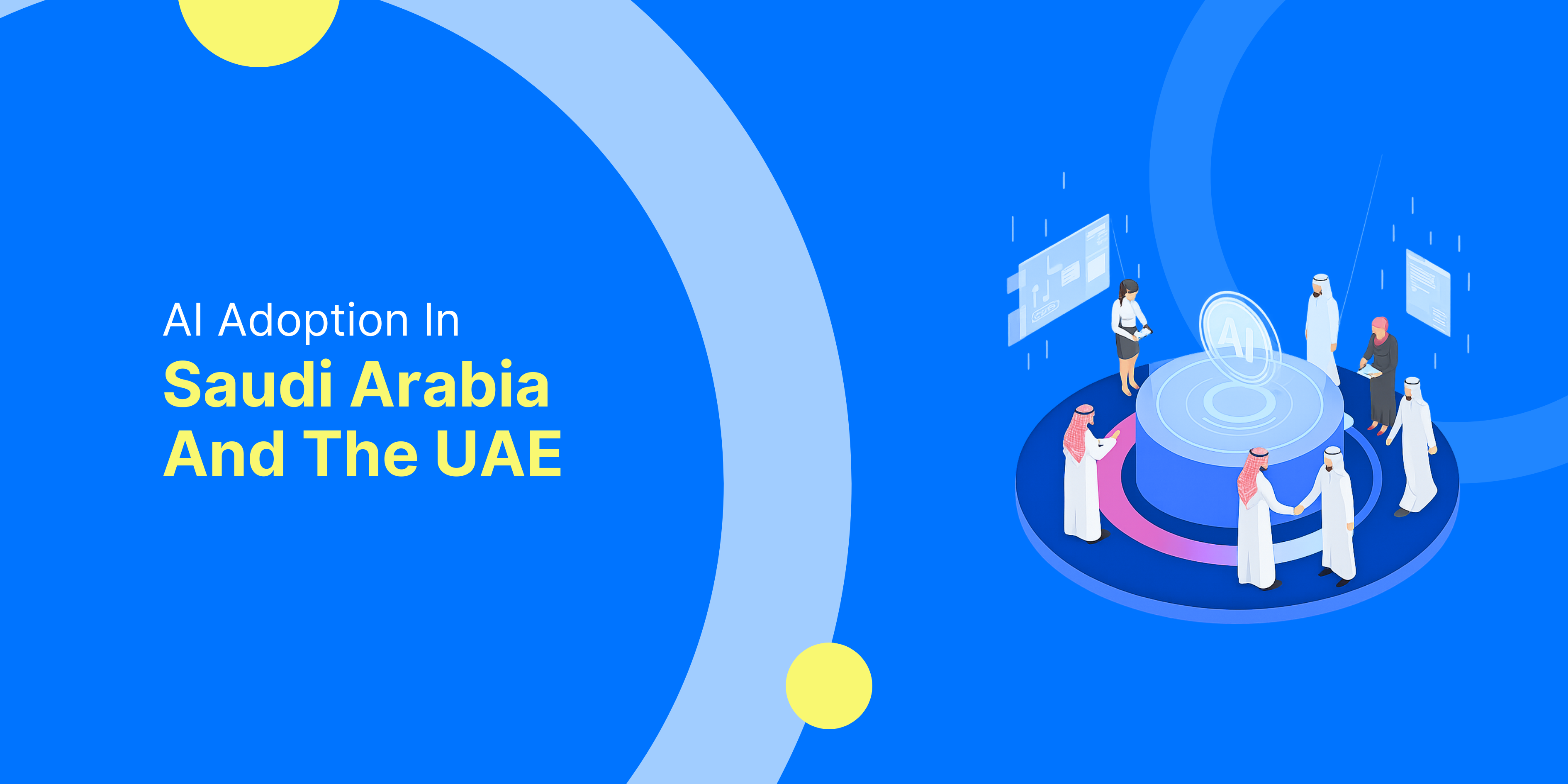
AI Adoption in Saudi Arabia and the UAE
LOOKING TO CONVERT MORE OF YOUR PROSPECTS TO SALES CALLS?
learn moreThe Middle East is undergoing one of the most significant technological transformations in its history. What began as early adoption of automation and digital tools has rapidly evolved into large-scale implementation of artificial intelligence across industries. Generative AI, in particular, has emerged as a strategic priority for governments and enterprises due to its ability to understand language, generate insights, analyze vast datasets, and enhance human decision-making.
Saudi Arabia and the UAE have created an ideal environment for AI innovation. National transformation agendas, forward-looking regulations, world-class digital infrastructure, and a highly connected population have combined to accelerate AI adoption. As a result, organizations in the GCC are deploying generative AI faster and more broadly than many global markets.
Why Generative AI Is Becoming Essential for GCC Businesses
For businesses across Saudi Arabia and the UAE, the appeal of generative AI is clear: measurable impact. Enterprises are using AI to reduce operational costs, improve productivity, enhance customer experience, and unlock value from unstructured data such as voice conversations and text interactions.
A major driver of this shift is the rise of AI-powered analytics and voice intelligence platforms. These solutions enable organizations to analyze customer conversations at scale, detect sentiment, measure quality, and uncover intent in real time. Regional innovators like Brightcall are making these advanced capabilities accessible by building AI solutions designed specifically for GCC enterprises, Arabic language nuances, and multilingual contact center environments. This localized approach is quietly transforming how businesses across the region understand and serve their customers.
Strategic National Drivers Behind AI Adoption in Saudi Arabia and the UAE
Government Vision and Policy Support
Saudi Arabia’s Vision 2030 and the UAE’s National AI Strategy 2031 place artificial intelligence at the core of economic diversification and digital transformation. These initiatives promote smart cities, intelligent government services, next-generation infrastructure, and data-driven public systems. Clear regulatory frameworks allow enterprises to adopt AI with confidence while ensuring responsible and ethical usage.
Investment and Innovation Ecosystems
The GCC is home to advanced AI research centers, innovation hubs, and accelerators that foster collaboration between global technology leaders and local talent. Many enterprises rely on partnerships with regional technology providers specializing in AI-driven communication intelligence, generative AI deployment, and enterprise automation to move from experimentation to real-world impact.
A Young, Digitally Native Workforce
Saudi Arabia and the UAE have some of the youngest and most digitally fluent populations globally. This demographic advantage accelerates AI adoption, as employees readily embrace AI copilots, automation tools, and intelligent workflows that improve efficiency and performance.
Cloud Infrastructure and Data Readiness
A strong cloud-first mindset across the region enables organizations to deploy generative AI solutions without heavy infrastructure investments. Modern cloud ecosystems also provide scalability, enhanced security, and seamless access to enterprise-grade machine learning models.
Real Business Use Cases of Generative AI in the GCC
Customer Experience and Contact Centers
AI is redefining customer experience in the Gulf. Enterprises use generative AI to analyze calls, generate automated summaries, score interactions, and provide real-time agent guidance. Voice intelligence platforms such as Brightcall help organizations gain deep visibility into customer sentiment, service quality, and agent performance—driving better outcomes at scale.
Marketing, Content Creation, and Localization
Marketing teams leverage AI to generate high-quality Arabic content, localize campaigns, analyze audience behavior, and tailor messaging to cultural contexts across Saudi Arabia and the UAE. This improves speed to market while maintaining brand consistency.
Banking, Financial Services, and Insurance
Banks and insurers apply generative AI for fraud detection, risk assessment, document automation, regulatory compliance, and customer onboarding. AI-driven insights enhance accuracy while reducing operational risk.
Healthcare and Patient Engagement
Healthcare providers use AI for clinical documentation, diagnostic support, appointment routing, and virtual patient assistance. Generative AI reduces administrative burden and improves patient experience across hospitals and clinics.
Construction and Real Estate Development
AI supports project planning, proposal automation, procurement optimization, and digital twin creation. Developers benefit from improved resource allocation, communication, and cost control.
Retail and E-Commerce
Retailers use AI to forecast demand, personalize recommendations, optimize inventory, and enhance supply chain visibility—allowing faster response to changing consumer behavior.
Government Services and Smart Cities
AI powers smart mobility, automated documentation, predictive city management, and citizen support platforms, enabling more responsive and efficient digital public services.
Generative AI Adoption Across Key GCC Sectors
Generative AI is no longer limited to pilot projects. It has become a foundational technology across the GCC. Governments deploy AI for smart city operations, telecom providers use AI for customer interaction analytics, banks automate decision-making, energy companies rely on predictive intelligence, and educational institutions adopt AI-driven learning platforms.
This widespread adoption confirms that AI in Saudi Arabia and the UAE is structural, strategic, and long-term.
The Future of Generative AI in Saudi Arabia and the UAE
Enterprise AI Assistants at Scale
AI copilots will support employees across sales, customer service, HR, operations, and finance—automating routine tasks and accelerating decision-making.
Arabic and Industry-Specific AI Models
Demand is growing for AI models that understand Arabic dialects, regional business language, and sector-specific terminology. Locally developed solutions will define the next phase of AI maturity.
Advanced Voice Intelligence and Conversation Analytics
As customer expectations rise, enterprises will increasingly rely on AI-powered voice analytics to gain deeper insights, ensure service quality, and empower agents. Regional platforms like Brightcall will continue shaping this evolution.
Responsible AI and Regulatory Frameworks
Saudi Arabia and the UAE are leading efforts to establish transparent, ethical, and secure AI governance frameworks focused on privacy, accountability, and trust.
National Data Platforms and Unified AI Ecosystems
Large-scale investments in cloud infrastructure and national data platforms will enable AI innovation at unprecedented scale, supporting long-term economic growth.
Conclusion
Saudi Arabia and the UAE are emerging as global leaders in AI-driven transformation. With strong government vision, strategic investment, and a future-ready workforce, generative AI is reshaping every major industry—from customer experience and financial services to healthcare, retail, construction, and government operations.
This momentum is reinforced by growing demand for intelligent communication tools, voice analytics, and enterprise AI platforms built for regional needs. As solutions like Brightcall demonstrate, AI tailored to the Gulf market is becoming a key competitive advantage. Organizations that act now will define the next chapter of the Middle East’s digital economy.
Interested? Read More...
.png)
.png)
.png)


